Wherein our traveling hero recounts his adventures along the way and other ruminations.
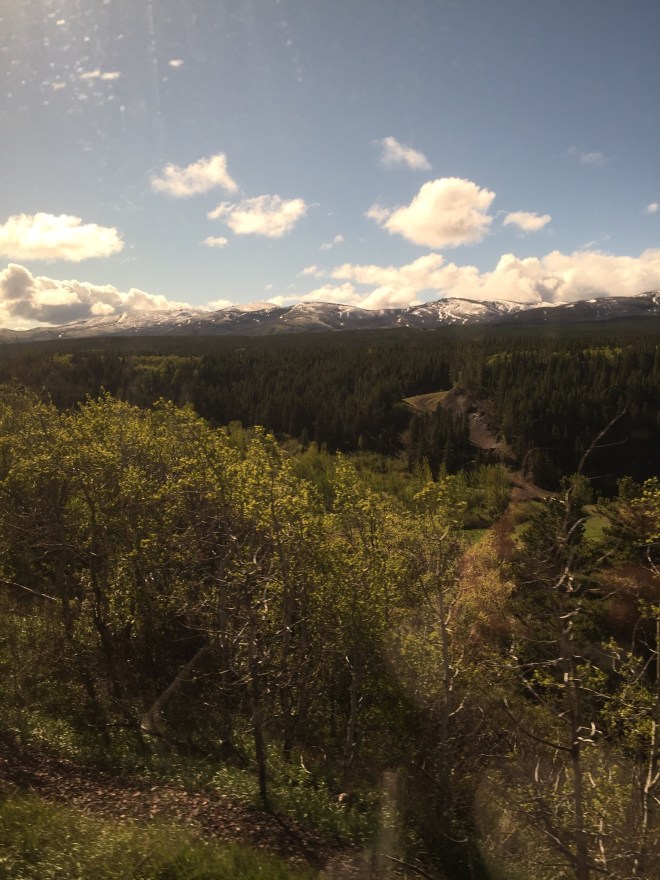
I still cannot get over the physical presence of a Railroad train and just how complex it is. It is something that for a causal observer would take for granted. ” Oh a train, how nice!” But in reality it is a compilation of so many moving parts all in concert with each other that you have to understand that it is no accident that it is here and functioning as well as it does. During lunch yesterday I was sitting with a son and mother and one of the men from the “rails to Trails” program in cooperation with Amtrak and the Nation Park Service and the young man asked if the wheels ( the complex of the wheels, springs and brakes ) are attached or held in place by the sheer weight of the car. It was a legitimate question and the answer was the sheer weight. Back in the history of the railroad the opposite was true and it was not a success so it was re-thought. The same with the complex system of the passenger cars. They may seem to be just a vehicle but they are made up of many systems which make it possible to transport passengers in comfort and safety unknown to their ancestors. One car, air conditioned, self contained sanitary plumbing, safe drinking water, lighting and other interlocked concepts all able to operate seven days aweek, 365 days a year with only bare maintainance is truly an engineering miracle. ( And we expect that to continue when we are passengers on that vehicle and are very upset when one system fails- it is truly interesting that the thing continues to work as well as it does.)
When you see the old photos of the cars of the past with their kerosene lamps and over stuffed chairs and elegant carpets and marvel at the elegance, then realize the best they could manage for air conditioning was to open the windows and hope that not much smoke and ash from the engine would get into the car, on your clothes and in your hair. ( which, I might add, was never to be and when you arrived at your destination, there would be considerable “freshening up” to be had.) Of course, to travel in those days required a fortune and most people could not have afforded the cost, nor for that matter the time.
It would take a week to cross the entire continent, but you had to stop for meals at designated railroad hotels where not only the passengers ate but also the crew. No meals on wheels back then. The greasy spoon ruled and you had better like biscuits and gravy or a buffalo steak and fixings because the menu was limited and so were the portions. Make it fast” you have a half hour to eat!”
Finally, to convince the traveling public that it was worth their while to travel and have a good experience the Santa Fe Railroad hired Fred Harvey to serve meals to their passengers and through his efforts food improved greatly for the travelers on the rail road. ( not to mention his idea of having young women serve the food known as the “Harvey Girls!” )
 billybobrailcom